



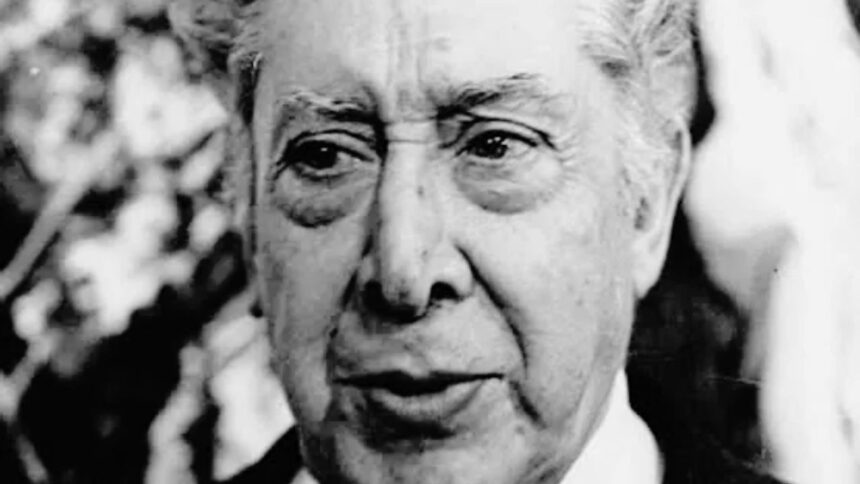
Ever wondered what it takes to mix art with a revolutionary spirit? Meet David Alfaro Siqueiros, the artist who did just that! Born on December 29, 1896, in the historic town of Chihuahua, Mexico, Siqueiros was more than just a painter. He was a muralist whose artistry carried the flames of revolution and social change. His life wasn’t just about putting brush to canvas; it was about embedding powerful stories into massive public murals that spoke to everyone from the working class to political elites. He passed away on January 6, 1974, in Cuernavaca, but his creations continue to inspire and provoke thought. Curious? Let’s explore this visionary’s journey and his seismic influence on the art world.
Early Life and Journey
Might you have heard the adage, “Life is the best teacher”? Well, Siqueiros’ early life was quite the classroom! He got his art education at the highly esteemed San Carlos Academy of Fine Arts in Mexico City. But instead of sticking solely to paint and brushes, he made a bold move in 1913. At the tender age of 17, Siqueiros took up arms in the Mexican Revolution as part of Venustiano Carranza’s Constitutional Army, later achieving the rank of captain. This wasn’t just a sideline gig; it shaped his life’s work, adding layers of truth and intensity to the subjects he depicted.
Then there was Europe. Europe was like an artist’s playground for him—a place where he dabbled in different techniques and styles. Siqueiros got up close and personal with Cubism and the grandeur of Renaissance frescoes. Imagine strolling through Italy and Paris with fellow artist Diego Rivera. Doesn’t that sound like hitting the creative jackpot? Siqueiros returned to Mexico in 1922, armed with experiences that would fuel his artistic exploits for a lifetime.
Foundations of Mexican Muralism
Okay, so picture this: Mexico in the early 20th century was a hotbed of change and innovation in art. And guess what? Siqueiros was right in the middle of this artistic revolution. He, alongside Diego Rivera and José Clemente Orozco, birthed what we know today as the modern Mexican muralism movement. These three superstars didn’t just paint for the sake of art; they painted to awaken, educate, and elevate society.
Collaborating with Rivera and Orozco, Siqueiros transformed blank walls into epic narratives. They addressed critical issues like social injustice, political power dynamics, and the impacts of industrialization. You’ve probably noticed how art has the magical ability to transcend time and space. That’s precisely what these artists did—capturing the zeitgeist of their era and turning it into a visual dialogue that continues to resonate today.
Political Activism and Influence
What’s better than an artist with a paintbrush in one hand? One with a manifesto in the other. Siqueiros wasn’t just all about colors and canvases; he was fiercely committed to political activism! An ardent supporter of communism, he played an instrumental role in organizing artist unions like the Syndicate of Revolutionary Mexican Painters, Sculptors, and Engravers. To top it off, he edited an influential publication known as *El Machete*.
Siqueiros’ activism didn’t end with ink on paper. He took his battle to the Spanish Civil War, fighting as a Lieutenant Colonel for the Republicans. Wild, right? But here’s the thing: his involvement didn’t come without risks. Around 1940, he orchestrated a failed attempt on Leon Trotsky’s life. Though the attempt was unsuccessful, it’s a testament to how fiercely he was committed to his cause. Across continents—from the United States to the Soviet Union, to Cuba and Chile—Siqueiros traveled, lecturing, and painting, spreading the revolutionary potential of art.
Artistic Style and Techniques
If you’re wondering what sets Siqueiros apart, brace yourself! His style? Monumental. His technique? Groundbreaking. We’re talking about murals that cover thousands of square feet. Visualize cinematic storytelling on public walls, where massive sculptural forms leap out, enhanced by dramatic lighting.
Here’s the twist: Siqueiros wasn’t afraid to think outside the box. Forget traditional paintbrushes; he experimented with materials like mosaics, bas-reliefs, and even aluminum panels. It’s as if he had a sixth sense for innovation, always a step ahead, integrating modern technology with time-honored art practices. Each piece was an experience—a blend of depth, light, and form that invited viewers not just to look, but to ponder.
Major Murals and Creations
Are you ready for some serious eye candy? Siqueiros’ murals aren’t just big in size; they’re big in storytelling. Check these out:
- Frescoes at the National Preparatory School in 1922 set the stage for what would follow: intense social narratives in vibrant colors.
- The People to the University, the University to the People (1952) resonates with themes of unity and progress.
- His colossal piece, From the Dictatorship of Porfirio Díaz to the Revolution (1957), stretches over 4,500 square feet in Chapultepec Castle.
- And who can forget For the Social Welfare of all Mexicans in the Hospital de la Raza? It’s a spatial marvel with multi-angular perspectives.
- Then there’s Man, the Master and Not the Slave of Technology at the Polytechnic Institute, which integrates technology and modernity.
- Lastly, take in The Apology for the Future Victory of Science over Cancer, gracing a cancer center with its vision of scientific triumph.
Each mural isn’t just a feast for the eyes; it’s a call to action, capturing the struggles and aspirations of an era.
Educational Contributions and Legacy
If you’ve ever wondered how art can educate, Siqueiros had the answer. His teaching wasn’t confined to classrooms; it happened wherever there was a wall to paint on. Imagine studying murals under the Mexican sun in San Miguel Allende in 1948. Doesn’t it sound like a dream?
Siqueiros was committed to making art accessible to everyone. In his vision, art was a public service, not a privilege reserved for the elite. His advocacy for socially meaningful and publicly available art remains a cornerstone of his legacy. It’s said that Siqueiros left behind not just murals, but a blueprint for how art can be a vehicle for societal transformation.
Conclusion
So, what do the life and art of David Alfaro Siqueiros teach us? He was an artist who lived as intensely as he painted, infusing every stroke with stories of struggle and hope. His monumental contributions have left an indelible mark on the world of art and activism.
From public murals that educate and inspire to his staunch political engagements, Siqueiros’ work continues to send ripples through contemporary society. We see his influence echoed loudly in movements championing public art and social justice.
Ready to explore how his revolutionary ideas continue to inspire new generations? Check out stories and articles on progressive art initiatives, or dig into business insights at Business Focus Magazine for a deeper dive into today’s cultural phenomena influenced by pioneers like Siqueiros.
So, the next time you see a piece of public art, take a moment to ponder. It’s not just paint on a wall; it’s a conversation—a powerful message born of artists like Siqueiros who dared to be bold!
Also Read: